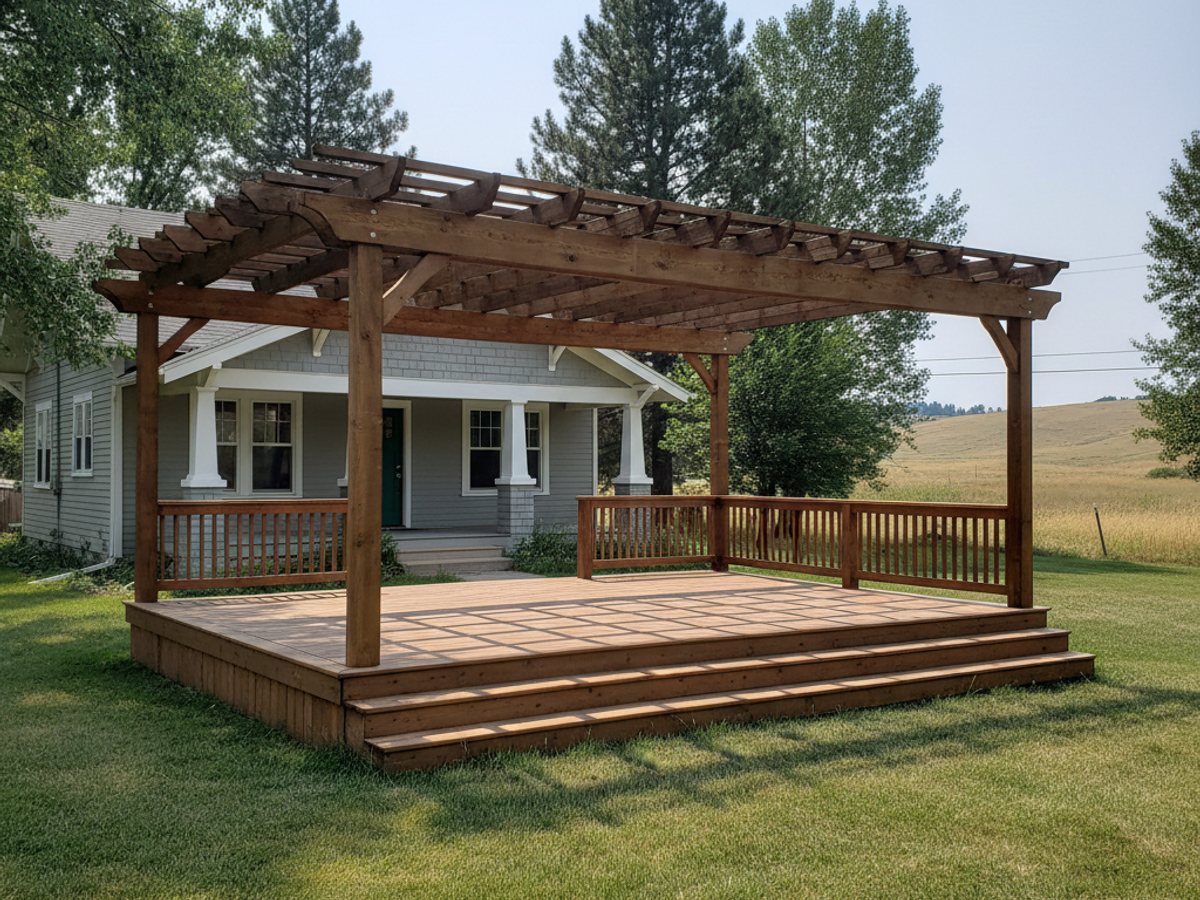
Most of what goes wrong on a deck job in Powell County was decided before anyone touched a tape measure. The footing depth, what's attached to the house, what the soil does in April. Here are ten things worth looking at before you start, whether you're building new or tearing into something that's already there.
What's actually under the yard
Deer Lodge sits in the Clark Fork valley, and the ground here swings between rocky glacial till on the benches and softer, siltier soil closer to the river bottom. Neither one behaves the same way twice. Dig a footing hole in late October and it might come up easy. Dig that same hole in a wet May and you're fighting mud and groundwater that wasn't there a few weeks earlier.
- Frost depth. This part of Montana sees footings set to around 42 inches, deeper than a lot of homeowners expect coming from a warmer state. A footing poured shallow will heave over a few winters and take the whole deck out of level with it. This is not something to guess at.
- Drainage around the footing. A sonotube footing surrounded by clay that holds water will crack and shift faster than one in soil that drains. If your lot has a low corner, that's usually where the first footing problem shows up.
- What's already buried there. Older lots in town, especially around the historic district, sometimes have old fence post stubs, buried cable, or an abandoned gas line from a prior addition. A call to Montana 811 before digging is standard, and it's free.
What the deck is attached to
If you're adding on to the house rather than building a freestanding deck, the ledger board is doing more structural work than people assume. It's carrying half the live load of whatever sits on that deck.
- Flashing behind the ledger. This is the single most common failure point on older decks in this area. If there's no flashing, or the flashing was never lapped correctly under the house wrap, water has been getting behind that board for years, and you won't see the rot until you pull it off.
- Lag bolts versus through-bolts. Code calls for structural screws or bolts spaced roughly every 16 inches, staggered, not toe-nails or deck screws doing a structural job they were never rated for.
- Rim joist condition. If the house rim joist behind that ledger is soft, no amount of hardware on the new side fixes the problem. Sometimes that means opening up siding to check before any decking goes down.
Permits and setbacks
Deer Lodge and Powell County handle this the way most small Montana jurisdictions do: a building permit is required for most new deck construction, especially anything attached to the house or built more than 30 inches off the ground, and the structure gets inspected at the footing stage and again once framing is done, before boards go on. If your lot is close to a property line, it's worth checking setback requirements before design, not after the footings are poured. HOAs aren't common in most of Deer Lodge's older neighborhoods, but a few newer developments outside town do have covenants worth reading first.
Skipping the permit step is tempting on a small job, but it matters most when you go to sell the house. An unpermitted deck addition can hold up a closing.
Snow load and what holds the railing up
This isn't coastal weather, and it isn't desert weather either. Winters bring real snow load, and summers swing 40 degrees in a day. That combination matters for two things on a deck:
- Joist sizing. A deck framed for a light patio load in a milder climate won't hold up under three feet of wet spring snow sitting on it for a week. Joist spacing of 16 inches on center is standard here, but span and lumber grade both need to match the load, not just the look of the deck.
- Railing posts. Code requires guardrails able to resist a 200-pound lateral load at the top rail. Posts bolted through with lag screws into a rim joist, not just toe-screwed, are what actually holds up to that test, and it's an easy thing for a builder to shortcut.
Materials, movement, and the small stuff
Last few things worth asking about before work starts:
- Moisture content of the lumber. Pressure-treated boards delivered wet will shrink as they dry, and gaps you set at 1/8 inch can open up to a quarter inch or more by fall. Ask what gap spacing the crew is using and why.
- Fastener type. Treated lumber reacts with standard galvanized fasteners over time. Hot-dip galvanized or stainless hardware is worth the small upcharge, especially anywhere close to the ground.
- What's hiding under an old deck you're resurfacing or removing. Framing that looks fine from the top can be soft underneath where snow sat against it for years. Pull a few boards before you commit to resurfacing over what's there rather than replacing it.
- How the old deck was stained, if at all. A board that's been sealed with an oil-based product doesn't always take a water-based stain well later. Worth knowing before you plan a refinish.
None of this is complicated, but it's the kind of thing that gets skipped when a job is priced and scheduled fast. If you want someone to walk the lot with you before anything is signed, that's the first visit we do at Mighty Deck Solutions, before any decision gets made about footings, framing, or what's salvageable from what's already there.