Every job below is one we do ourselves across Deer Lodge.
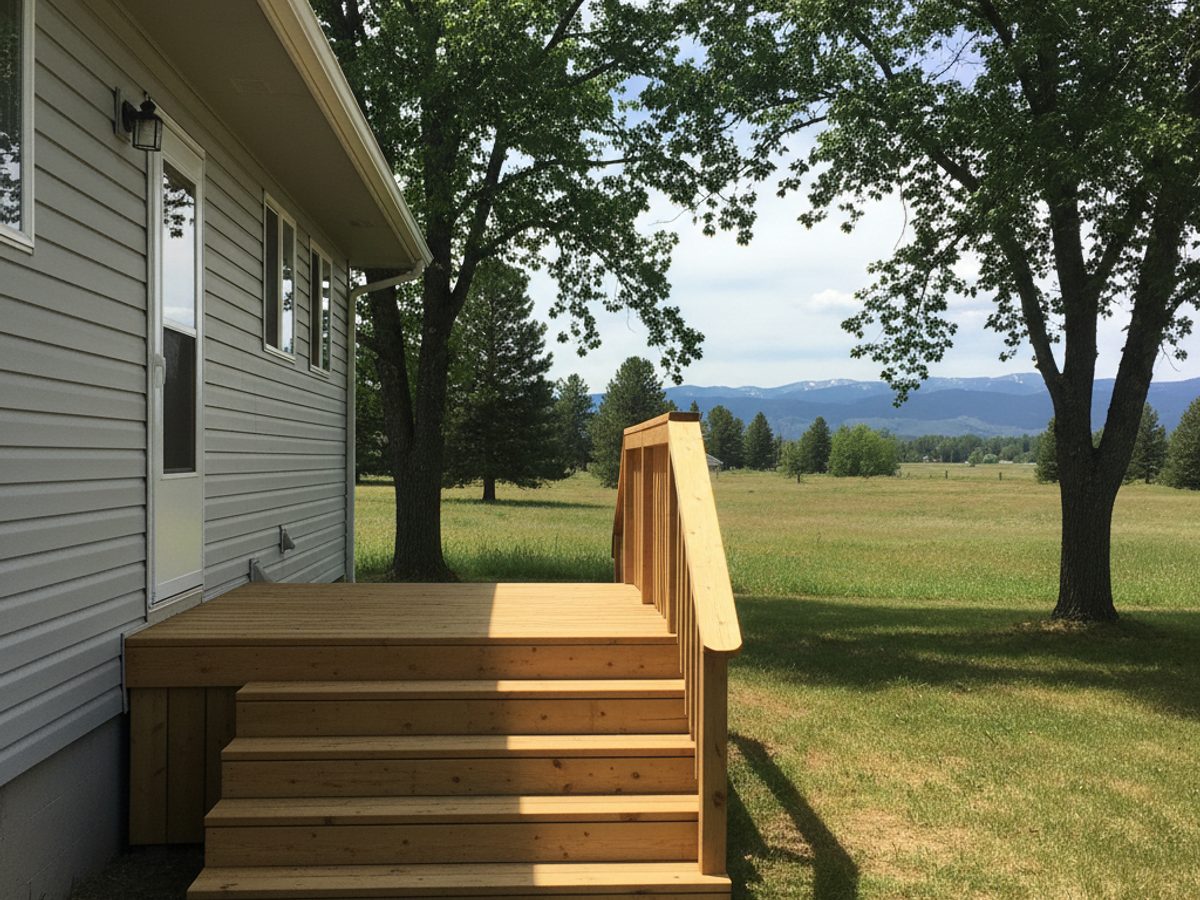
We frame new decks from the ground up, setting footings below the frost line so the structure doesn't heave when the ground freezes. Ledger boards get flashed where they meet the house, and joists are spaced and sized to the span your design calls for. We'll walk you through pressure-treated, cedar or composite before we order a single board.
Soft or spongy boards, loose railings and sagging frames usually mean rot or a joist that's given out underneath. We pull the affected boards, check the joists and beams below, and sister or replace anything that's compromised instead of just patching over it. Small repairs like a loose stair stringer or a popped fastener we can usually handle same day.
Montana sun at this altitude breaks down wood fast, and freeze-thaw cycles work moisture into any gap in the finish. We power wash the deck, let it dry fully, then apply a semi-transparent or solid stain depending on the wood and how much grain you want to keep showing. Plan on recoating every two to three years to keep water out of the boards.
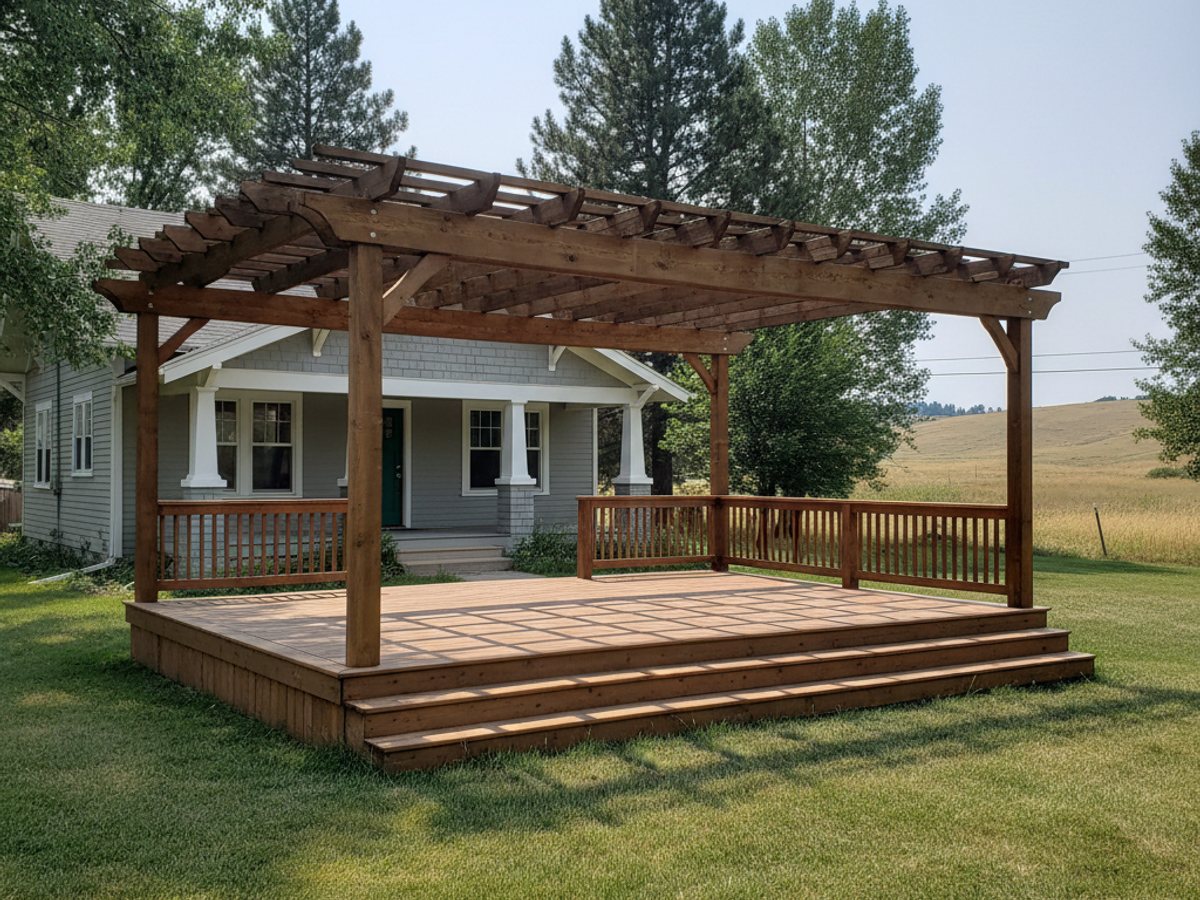
Some decks just need to be a rectangle off the back door, others need to work around a slope, a mature tree, or a walkout basement. We design multi-level decks, built-in benches and stairs that match the grade of your yard instead of fighting it. We'll sketch it out and give you a written quote before anything gets cut.
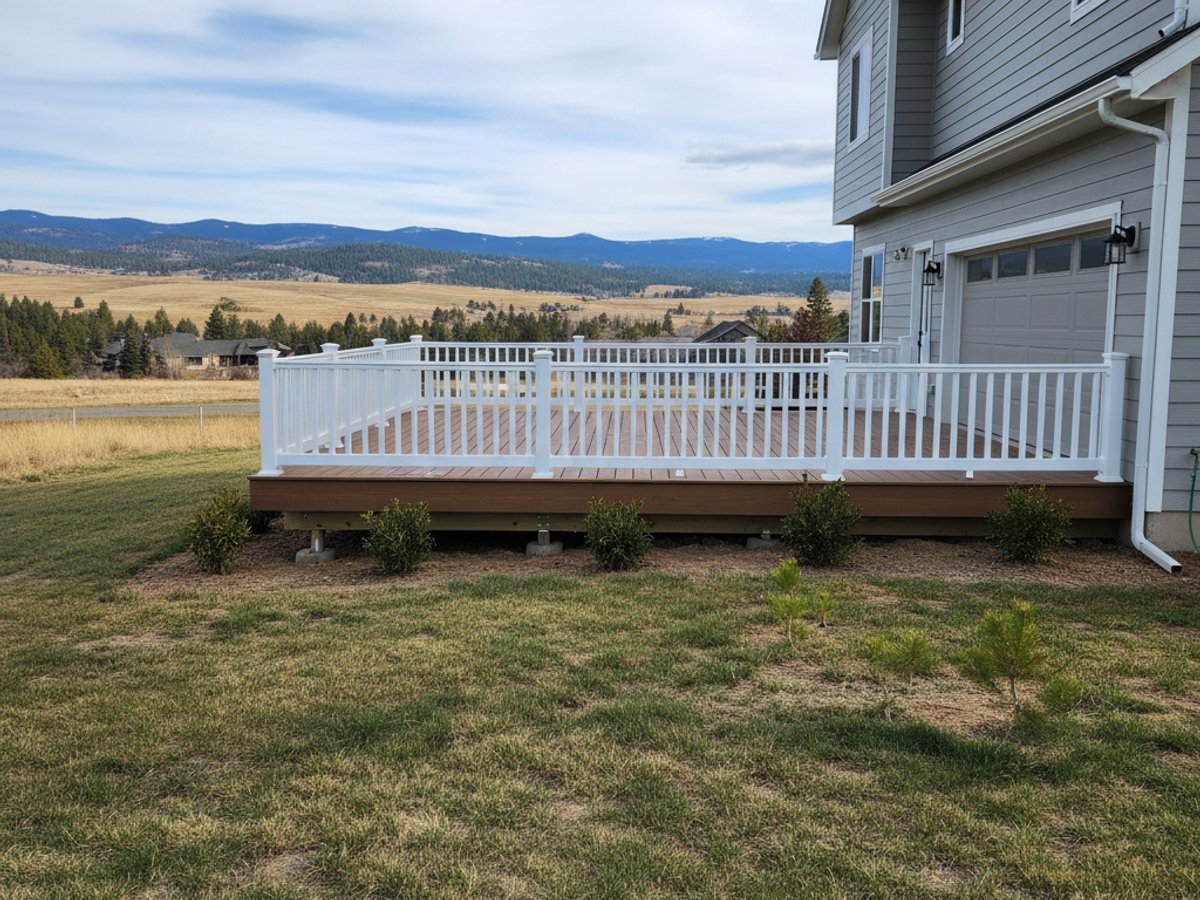
Composite boards like Trex or TimberTech skip the annual staining and hold up well to Montana's freeze-thaw without cracking or splintering. We install with hidden fastener systems for a clean look and leave the manufacturer's expansion gaps so the boards don't buckle in summer heat. It costs more up front than pressure-treated pine, but you're not restaining it every couple years.
Code here calls for guardrails on any deck over 30 inches off the ground, with balusters spaced so a 4-inch sphere can't pass through. We install wood, metal and cable rail systems, and we fix wobbly posts by resetting them into the frame rather than just tightening a screw. A railing that shifts when you lean on it is a structural problem, not a cosmetic one.
If the frame underneath is still solid, we can pull the old decking and replace just the surface boards, which costs a lot less than a full rebuild. We check every joist while the boards are off, since that's the only time you get a clear look at the structure. This works well on a deck that's ten to fifteen years old with a frame that's held up but boards that haven't.
A deck that bounces when you walk on it usually has an undersized joist, a rotted beam, or a footing that's settled unevenly. We open up the structure, sister damaged joists, replace beams, and reset footings where the ground has shifted. This is the part of the job that doesn't show once it's covered back up, but it's the part that decides whether the deck is safe in ten years.
Old decks come down fast once we know what's holding them up, whether that's ledger bolts, buried footings, or both. We haul off the old lumber and clear the site so it's ready for a new build, or just left clean if you're not rebuilding right away. Worth checking, sometimes the footings underneath are still good and can be reused.
A screened-in section off an existing deck keeps the bugs out without closing off the view, and it extends how many months a year you actually use the space. We frame it to tie into the existing deck structure so it doesn't look like it was added on later. This works well as a second phase after the open deck's been in a season or two and you know exactly where you want it.
Four steps, and no surprises in any of them.
You tell us what you want doing, we look at what is actually there, and we ask the awkward questions early.
In writing, itemised, free. If something might add cost later we flag it now rather than at the end.
Same crew throughout. We cover your floors, keep the dust down and tidy up before we leave each day.
You point out anything you are not happy with and we fix it before the invoice, not after.
Deck building and repair across Powell County and beyond.
Questions that come up once a deck project is underway.
Describe the problem and we will tell you what it probably is. No obligation.