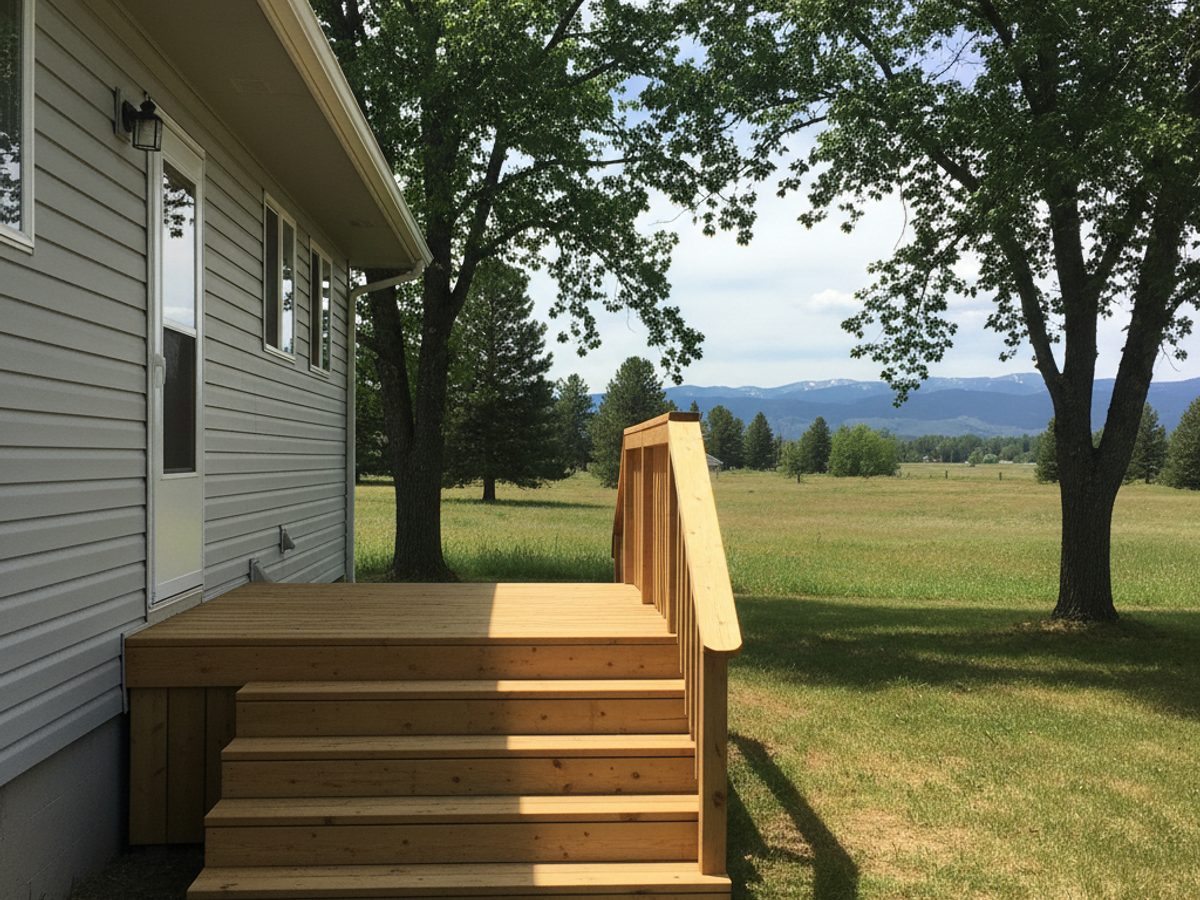
Deer Lodge sits at about 4,700 feet in the Deer Lodge Valley, and that elevation runs the calendar for anyone building or fixing a deck here. What works in Missoula or Billings doesn't always work here, because our frost line runs deeper and our building season runs shorter. If you're planning any kind of deck project, timing isn't a minor detail. It decides whether your footings hold, whether your stain cures right, and whether you're waiting until June for work that could've started in April.
Why frost depth changes everything
Powell County typically requires footings to go down 42 to 48 inches to get below the frost line. In a valley like this, where winter lows regularly sit well below zero for stretches in January, a footing poured too shallow will heave as the ground freezes and thaws around it. That heave shows up years later as a deck that's gone slightly out of level, railings that don't line up the way they used to, a ledger board pulling away from the house. You can't pour a proper footing into frozen ground, and you shouldn't try to pour concrete at all once ground temps drop toward freezing without heated blankets and extra cure time. That's why new deck builds and any footing replacement work are a spring-through-fall job here, not a winter one.
Spring: good intentions, bad timing
April and early May look tempting because the snow's gone and everyone's itching to start. But this is mud season. The frost is coming out of the ground from the top down, so the soil underneath can still be frozen solid or saturated with meltwater a foot below the surface. Digging footings in that condition is a mess, and it's hard to get a clean, compacted base for a post. Most years, the ground here doesn't fully firm up until mid to late May. If a builder tells you they want to wait a few weeks before breaking ground, that's not stalling, that's reading the soil correctly.
Summer: the real building window
June through August is when most deck installation, framing, and structural repair happens in this part of Montana, and for good reason. The ground is workable, days are long, and you get enough consecutive dry weather to frame, deck, and rail a structure without rain delays stacking up. One thing people don't expect: even in July, nights here can drop into the 40s. That's good for working conditions but it matters for anyone staining or sealing during this stretch, because most stain products want a surface temperature between 50 and 90 degrees and no rain in the forecast for at least 24 hours after application. Morning dew is common even on hot days at this elevation, so stain crews usually wait until mid-morning for the wood to dry out before they start.
Composite decking is less fussy about ground conditions, but it has its own summer quirk. Composite boards expand and contract more than people expect across Montana's temperature swings, sometimes close to 3/8 inch over a 12-foot board depending on the product and the day's temperature range. A board installed on a 90-degree afternoon needs different gapping than one installed on a cool morning, or you'll get buckling or gaps that open up by November. This is where experience with the specific product matters more than just owning the right saw.
Fall: underrated for staining and small repairs
September into early October is honestly the best stretch of the year for staining and sealing an existing deck. Humidity drops, days are still warm enough for proper cure, and you're not fighting the intense midday sun that can flash-dry a coating before it penetrates the wood. A stain applied in July heat can skin over on top while staying wet underneath, which leads to peeling the following spring. Fall avoids that. It's also a smart time for deck repair work, replacing a rotted joist, resetting a wobbly railing post, before snow load gets added to a structure that's already weak. Nobody wants to find out a deck can't handle three feet of snow after it's already sitting on the boards.
Winter: planning season, not building season
From November through March, actual construction mostly stops here. Lumber doesn't glue or fasten well when it's frozen, concrete needs extraordinary measures to cure safely, and most crews aren't going to frame a deck in a wind chill. What winter is good for is everything that happens before the first shovel goes in the ground: custom deck design, material selection, permit applications with the county, and scheduling your spot for the spring. Powell County handles building permits for most residential deck work, and depending on your deck's size and height, you'll likely need a permit before footings go in, with inspections for footing depth and framing before the decking boards go down. If your lot is near a property line, a setback check is worth doing before you design around a boundary that isn't where you think it is. Deer Lodge itself doesn't have heavy HOA coverage the way some newer developments outside town do, but it's still worth checking if your subdivision has its own rules on deck height or railing style.
What this means for older homes versus newer ones
A lot of homes in and around Deer Lodge's older neighborhoods date back to the early 1900s through the mid-century, and decks added to those houses over the decades often weren't built to current frost depth or ledger attachment standards. If you're working on one of these, expect the repair or rebuild to take a little longer because the existing structure usually needs more correcting than a from-scratch build would. Newer construction on the edges of town tends to have decks built closer to current code, which makes resurfacing or railing upgrades more straightforward.
If you're trying to figure out where your project fits in that calendar, that's a conversation worth having before you pick a start date. Mighty Deck Solutions works through the whole season here, from spring footing work through fall staining, and can tell you honestly whether your timeline makes sense for Deer Lodge's ground and weather, not just for a generic build-anywhere schedule.