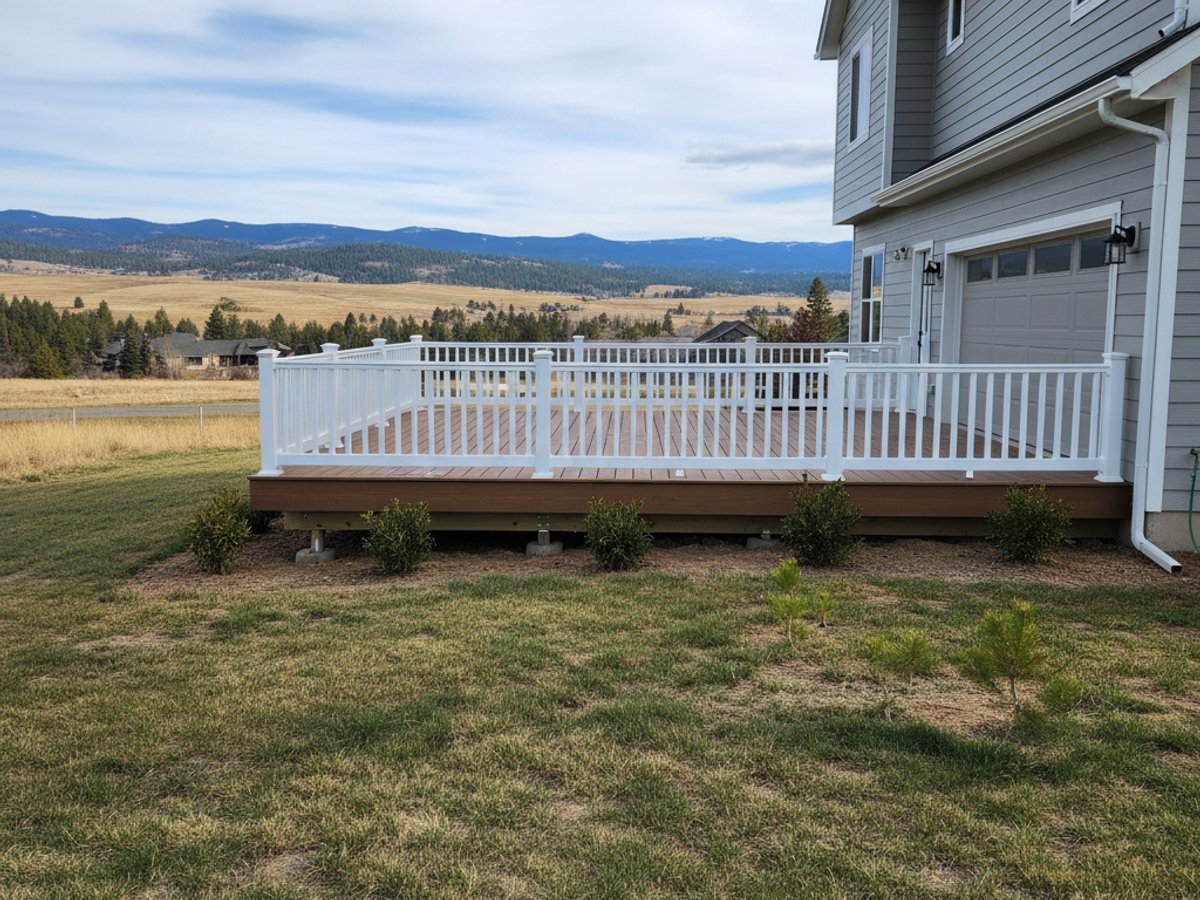
A deck is one of the few home projects where the mistakes stay hidden for a year or two and then show up all at once. A footing poured too shallow doesn't heave the first winter. It heaves the third or fourth, after enough freeze-thaw cycles have worked on it, and by then the builder who poured it is hard to reach. Deer Lodge sits at about 4,700 feet in the Deer Lodge Valley, and the ground here goes through more freeze-thaw swings than a builder working in Missoula or Billings deals with. That changes what you should ask before you sign anything.
Ask how deep the footings go
Frost depth in this part of Montana runs deep, and Powell County's building code will specify a minimum footing depth for anything attached to the house or holding structural weight. A lot of builders will tell you 42 inches is the number they work to locally, sometimes more depending on the site. If a bid doesn't mention footing depth at all, or the person quoting can't answer the question without checking, that's worth noticing. A deck post sitting on a footing poured above the frost line will get pushed up out of the ground as the soil freezes and expands. You won't see it happen. You'll see the deck a few years later, slightly tilted, with gaps opening up where the boards meet the house.
Ground here also tends to run rocky and clay-heavy once you get past the topsoil, which makes hand-digging footings slow going. Some builders will want to auger the holes with equipment instead of digging by hand. Either is fine. What matters is the hole ends up the right depth and diameter, not how it got dug.
Find out who's pulling the permit
Most deck work above a certain height or size needs a permit through the county, and in Powell County that typically means an inspection of the footings before they get covered with concrete, and another inspection once the framing is up, before the decking goes down. A builder who tells you "we don't bother with permits on decks" is telling you they've decided the inspection isn't worth the time, which means nobody but them ever checked the footing depth or the ledger attachment. That might save two weeks. It also means if you sell the house later, an inspector working for the buyer can flag the deck as unpermitted work, and now it's your problem to sort out at a bad time. Ask directly: who pulls the permit, and does the quote include it. If it's not clear, get it in writing before the crew shows up.
Look at the ledger board, not just the decking
Homeowners tend to judge a deck by the boards on top, because that's what they'll walk on. The ledger board is the part that actually holds the whole structure to the house, and it's the part that fails most often when it's done wrong. A ledger should be through-bolted or lag-bolted into the house's rim joist, not just nailed, and it needs flashing above it so water running off the house doesn't sit against the wood and rot it from behind. Ask what they use to attach the ledger and whether flashing is included. If someone shrugs and says "we just nail it up," that deck is going to separate from the house eventually, usually with no warning until it does.
Same goes for joist hangers. They should be galvanized, rated for exterior use, and nailed with the specific joist hanger nails made for them, not whatever's in the nail gun. It's a small thing that a homeowner never sees and a bad builder skips to save twenty minutes.
Ask what material actually holds up here
Deer Lodge gets intense sun at this elevation and very dry air most of the year, which means untreated or poorly finished wood checks and splits faster than it would at lower elevation with more humidity. Pressure-treated pine is still the most common decking material around here because it's affordable and it's what most lumberyards stock, but it needs to be stained and sealed on a schedule, roughly every two to three years, or the sun and the winter freeze-thaw cycle will open it up. Composite decking costs more up front but doesn't need that maintenance, and it handles the temperature swings between a hot July afternoon and a below-zero January night better than natural wood does, since it's not absorbing and releasing moisture the same way. Neither one is the wrong answer. What's wrong is a builder who doesn't ask about your maintenance plans before recommending one.
Railings matter here too, not just for looks. Montana's residential code generally calls for a guardrail height of at least 36 inches and baluster spacing tight enough that a 4-inch sphere can't pass through. If a builder's sample railing looks wider-spaced than that, ask about it directly.
What to walk away from
- No written contract, or a contract that doesn't list the lumber grade, footing depth, and fastener type.
- A price that's dramatically lower than every other quote you got, with no explanation for why.
- Reluctance to pull a permit, or a claim that permits aren't needed for a deck of this size, without pointing you to where that's confirmed.
- No proof of insurance. If someone falls off a ladder on your property mid-build, you don't want that landing on your homeowner's policy.
- A builder who wants full payment up front. A deposit is normal. All of it before any work starts is not.
Deer Lodge has a mix of older homes near downtown, some going back close to a century, and newer construction out toward the edges of town and on the acreages nearby. An older house often has a foundation and framing that weren't built with a modern deck load in mind, which means a ledger attachment sometimes needs extra thought, or the deck needs to be freestanding on its own posts instead of hung off the house at all. A good builder will look at your house before they quote a number, not just measure the footprint and send a price by text.
None of this is complicated once you know to ask about it. It's just easy to skip if you're only comparing bottom-line prices. We've built and repaired enough decks around this valley to know which corners get cut and what it costs later. If you want a second opinion on a quote you already have, or you're starting from scratch, take a look at Mighty Deck Solutions and we'll walk the site with you before anything gets dug.